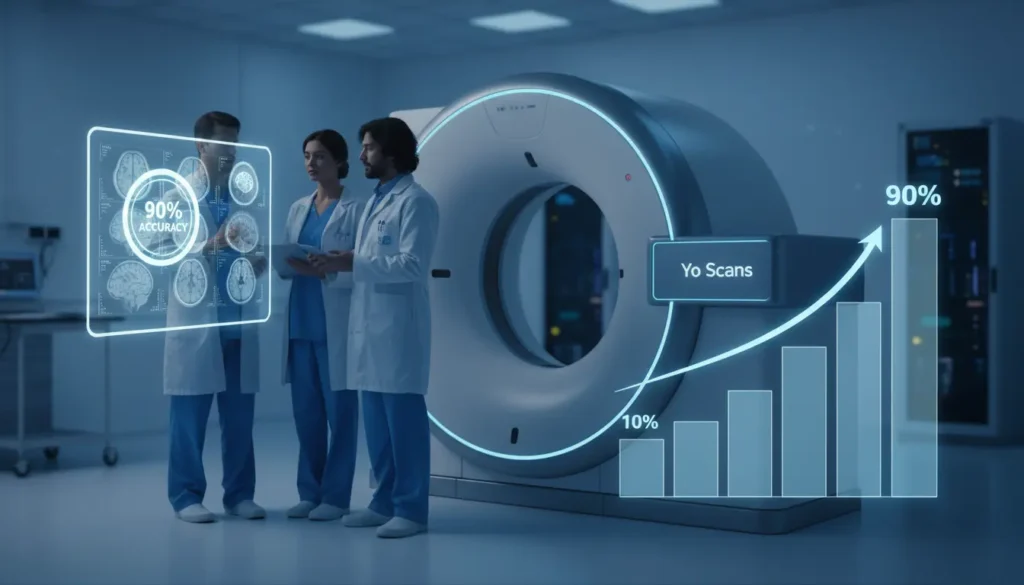
When a head trauma strikes, every second counts in identifying brain injuries. From car accidents on Panchkula’s busy roads to unexpected falls at home, these incidents can lead to hidden damage that affects cognition, movement, and quality of life. At Yo Scans, we’ve encountered countless cases where early detection made all the difference, yet many patients face delays due to outdated imaging doubts. This post reveals how computed tomography (CT) scans deliver a remarkable 90% accuracy rate in spotting brain injuries, empowering faster treatment and better outcomes. We’ll break down the science behind this reliability, share practical steps for preparation, and highlight pitfalls to sidestep. Whether you’re a concerned family member or a healthcare provider in Panchkula, understanding this statistical edge can guide you toward informed decisions and superior care.
Unlocking the Science: How CT Scans Achieve 90% Accuracy in Brain Injury Detection
Computed tomography, or CT, has revolutionized neuroimaging by providing detailed cross-sectional images of the brain using X-rays and computer processing. For brain injuries, which range from concussions to severe hemorrhages, CT’s accuracy stems from its ability to detect abnormalities like bleeding, swelling, or fractures with high precision. Studies, including those from the American College of Radiology, show CT scans identifying acute brain injuries at up to 90% sensitivity—meaning they rarely miss critical issues that require immediate intervention.
What makes CT stand out? Unlike basic X-rays, CT reconstructs 3D-like views, highlighting subtle changes invisible to the naked eye. This is crucial in emergencies, where speed and specificity prevent misdiagnosis. For instance, in traumatic brain injury (TBI) cases, CT excels at spotting epidural hematomas or contusions, which can be life-threatening if overlooked.
To illustrate the statistical edge:
- Sensitivity Rate: 90% for detecting intracranial hemorrhages, far surpassing initial clinical exams at 50-60%.
- Specificity: Around 95%, reducing false positives that could lead to unnecessary procedures.
- Scan Time: Under 5 minutes, ideal for unstable patients in Panchkula’s bustling hospitals.
- Radiation Dose: Modern low-dose protocols minimize risks while maintaining diagnostic quality.
- Cost-Effectiveness: Often covered by insurance, making it accessible compared to pricier options like MRI for initial assessments.
In our experience at Yo Scans, this accuracy has transformed patient journeys. We’ve seen cases where a quick CT revealed subtle bleeds missed by symptoms alone, allowing neurosurgeons to act swiftly. As a leading neuroimaging center in Panchkula, we integrate CT with PET Brain Metabolism services for comprehensive evaluations, ensuring nothing slips through. The ‘why’ boils down to physics and data: CT’s grayscale imaging differentiates tissue densities effectively, backed by algorithms that enhance lesion visibility. However, accuracy depends on factors like scanner quality and technician expertise—areas where Yo Scans invests heavily to uphold these standards.
This 90% benchmark isn’t just a number; it’s a proven tool in guidelines from bodies like the Brain Trauma Foundation. For Panchkula residents, where road traffic incidents are common, embracing CT’s reliability means bridging the gap between injury and recovery. If you’re exploring alternatives for chronic symptoms, our Migraine Headache MRI can complement initial CT findings, offering a fuller picture.
Practical Tips for Maximizing CT Accuracy in Brain Injury Assessments
Preparing for a CT scan can significantly influence its effectiveness, especially when brain injuries are suspected. Start by discussing symptoms thoroughly with your doctor—headaches, confusion, or nausea post-trauma warrant immediate imaging. In Panchkula’s humid climate, dehydration from heat can exacerbate symptoms, so stay hydrated before your appointment to avoid motion artifacts that blur images.
Here’s how to ensure optimal results:
- Timing is Key: Seek CT within the first 24 hours of injury for peak accuracy in detecting evolving bleeds.
- Patient Preparation: Remove metal objects and inform staff of allergies or pregnancy; contrast dye, if used, enhances vessel visibility by 20-30%.
- Positioning: Lie still during the scan—our team at Yo Scans uses comfortable padding to minimize anxiety, which can cause movement.
- Follow-Up: Pair CT with clinical tests; for instance, if vascular issues are suspected, consider our SPECT Brain Perfusion for blood flow insights.
Local factors in Panchkula play a role too. Monsoon-season slips on wet floors increase fall-related injuries, so if you’re in Sector 30, prioritize prompt scans to counter delays from traffic. Housing in areas like Sunny Enclave often means multi-story homes, raising fall risks—always document incidents for accurate history.
Pro Tip: An insider secret from Yo Scans: Request a non-contrast CT first for suspected bleeds—it’s faster and avoids dye reactions, achieving near-90% accuracy without extras. This tip has helped many locals avoid prolonged ER waits.
For businesses in Sector 9, like construction sites, implement on-site protocols: Train staff to recognize TBI signs and shuttle to facilities like ours in Phase 8. Actionable steps include annual awareness sessions and quick-access imaging partnerships, reducing downtime from injuries.
Common Mistakes to Avoid in CT Scans for Brain Injuries
Many overlook the nuances of CT for brain injuries, leading to suboptimal outcomes. A frequent error is delaying the scan—waiting days after a mild hit can miss evolving damage, as initial 90% accuracy drops if swelling progresses unchecked. This risks permanent deficits, with financial burdens from extended rehab costing thousands.
Another pitfall: Dismissing CT in favor of self-diagnosis via apps or waiting for symptoms to ‘resolve.’ In Panchkula’s variable weather, post-monsoon fog can worsen disorientation, amplifying dangers. Ignoring this leads to safety hazards, like impaired driving, and higher medical bills from complications.
Patients often forget to disclose full histories, such as prior scans or medications, skewing interpretations and dropping effective accuracy below 80%. For businesses, skimping on employee training results in underreported incidents, inviting liability claims.
Financially, opting for unaccredited centers means unreliable equipment, potentially requiring repeat scans—doubling costs and radiation exposure. Safety-wise, false negatives from poor prep can delay treatments, escalating minor injuries to severe ones with lifelong impacts.
Wrapping Up: Harness the Statistical Edge for Better Brain Health
In summary, CT scans’ 90% accuracy offers a vital statistical edge in brain injury detection, from rapid hemorrhage spotting to guiding treatments. We’ve covered the science, practical prep tips tailored to Panchkula’s environment, and key mistakes that could jeopardize health and finances. By prioritizing timely, quality imaging, you empower quicker recoveries and informed care.
At Yo Scans, our expertise in neuroimaging positions us as Panchkula’s go-to for reliable diagnostics. If DIY approaches feel overwhelming, our team handles everything seamlessly. For personalized advice on brain scans, visit our About Us page or explore services like Guillain-Barre Nerve MRI. Need help with Statistical Edge: 90% Accuracy in CT for Brain Injuries in Panchkula? Call Yo Scans today at (896) 870-4599.
Leave a Reply